The Power of Evolution
The Evolution Power
Selling the 'cerebellum' to humanoid robot companies is like selling engines to sports car manufacturers. But can this be profitable?
He says it can. You know those 18 humanoid robots at the World AI Conference? Seven of them utilized our 'cerebellum'.
Amazing. Then why don't you make your own humanoid robots?…
Imagine 'shoes' as a big tree. Initially, there was a sturdy branch called 'sports shoes'. Do you remember the feeling of wearing new sports shoes as a child? It felt as if you could fly.
But today, if you say you want to buy sports shoes, the salesperson might be confused and ask: Do you want sneakers, running shoes, roller skates, or hiking boots?
The sport 'scene' has been 'segmented'. If you say you want sneakers, the salesperson might further ask: Are you looking for soccer shoes, basketball shoes, tennis shoes, or badminton shoes?
User demands are like this tree, constantly branching out, growing new twigs. Each twig represents a specific demand, a niche segment.
When competitors are 'competing' with you on a branch, what do you do? Grow new twigs. This new twig in a niche segment might still be free from competition.
Insight into niche segments is insight into the future.
So, what to do when the industry is too competitive?
Bend down and carefully observe those niche segments that might be overlooked. Hidden within the niche segments that match your capabilities is gold.
So, why keep competing on price in the same 'niche'? You can choose to be 'the only flower blooming' next to this niche, or find a 'niche segment' underneath it.
Or perhaps, you could be 'creating tools' behind this niche.
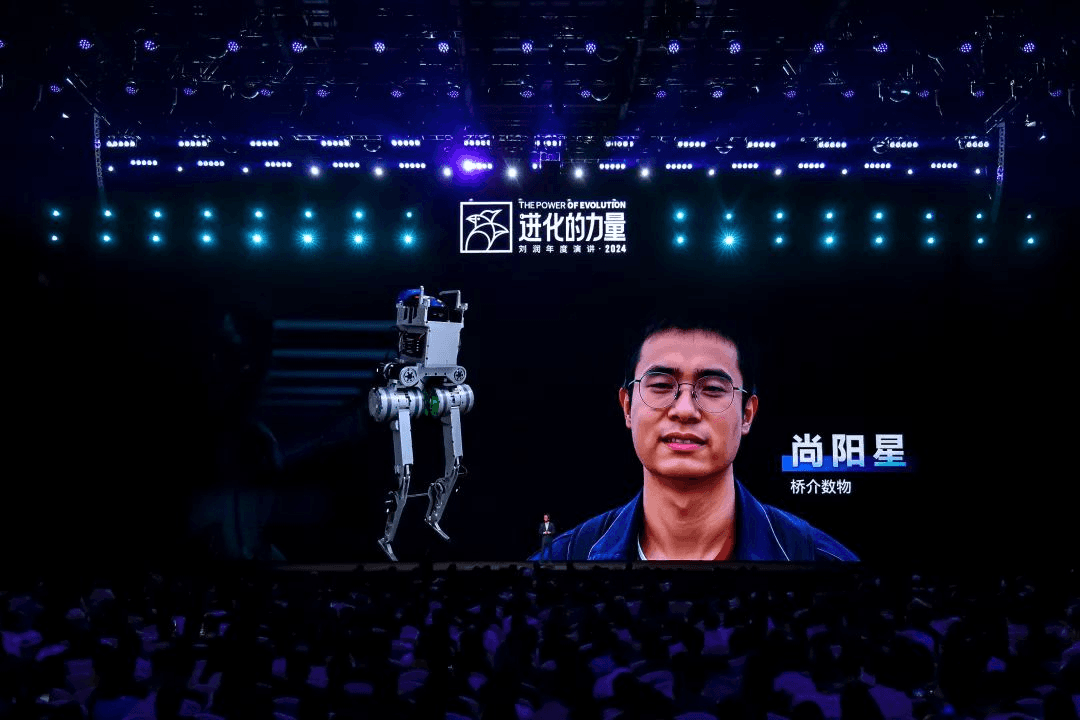
This young guy born in '99 is called Shang Yang Xing.
He is pursuing his master's degree at the Southern University of Science and Technology, and he's also an entrepreneur. His company, BridgeDP, specializes in 'cerebellum algorithms'.
What is a 'cerebellum algorithm'?
Humans can run, jump, and do somersaults without falling, all thanks to the 'cerebellum' maintaining balance. Shang Yang Xing's company trains AI to create balanced 'machine cerebellum' and sells it to humanoid robot companies, enabling them to maintain balance like humans.
Isn't it impressive? Selling the 'cerebellum' to humanoid robot companies is like selling engines to sports car manufacturers. But can this be profitable?
He says it can. You know those 18 humanoid robots at the World AI Conference? Seven of them utilized our 'cerebellum'.
Amazing. Then why don't you make your own humanoid robots?
Because this 'niche' is just too competitive.
Look, Xiaomi has a robot named CyberOne, Tesla has a robot named Optimus that looks like Optimus Prime, even OpenAI has invested in Figure AI. Not to mention the veteran Boston Dynamics. There are also many Chinese companies engaged in this.
We are too small to compete. Humanoid robots are a gold mine, but everyone is scrambling for it. Instead of competing head-on, why not create tools behind the scenes for them?
That's well said. Looking at this passionate young man, I suddenly wanted to ask: What is your dream?
He said, my dream is to leave a mark in human history. At the end of last year, I received investment from Chinaccelerator. I've also just applied for a leave of absence from my master's program. The school is very supportive; I want to achieve something with my company first. Big opportunities are coming, and I must not miss them.

Lately, we often hear people say 'I want to take civil service exams', 'I want to take certification exams', or 'I want a stable job'. That's certainly okay. It's great. But when I hear 'I want to leave a mark in human history', I feel a surge of inspiration. This is the dream.
Indeed, the dream! As long as young people are full of dreams, China is full of hope.
So, what to do when the industry is competitive?
Shang Yang Xing's solution is to: Create tools. While they mine for gold, I provide the shovels.
A 'niche' is competitive because everyone wants to occupy it. At this point, we might shift perspectives and look around:
See if there are opportunities to 'bloom alone' next to it;
See if there are opportunities for deep exploration beneath it;
See if there is a need to 'create tools' behind it.
By stepping out of the current 'niche', you can 'escape the competition'. Around it, beneath it, and behind it, there might be abundant opportunities.
